Top 10 Solar Flood Lights for Security How to Choose?

Time:2026-10-25 Author:Aria
0%

Choosing outdoor lighting for security is not simply a matter of selecting the brightest fixture. A dependable solar flood light must balance illumination, motion detection, battery capacity, weather resistance, and installation height. In real yards, a light may face dusty walls, heavy rain, tree shadows, or winter darkness. These conditions can expose weaknesses that product photos rarely show.

This guide to the Top 10 Solar Flood Lights for Security explains how different models perform in practical situations. It considers beam coverage, sensor range, charging time, adjustable panels, battery design, and nighttime runtime. It also examines useful details, such as whether a light can illuminate a driveway without shining into a neighbor’s window. Small choices matter. A poorly positioned sensor may trigger repeatedly when branches move.

If you are wondering how to choose solar flood lights for security, begin with the area you need to protect. Measure the driveway, entrance, walkway, or garden boundary. Then compare brightness, detection distance, IP weather ratings, and mounting flexibility. More lumens do not always mean better security. Excessive brightness can create glare and darker shadows beyond the beam.

Real-world performance can vary. Cloudy weather, blocked panels, and cold temperatures may reduce charging efficiency. Manufacturers’ runtime claims also depend on testing conditions. That deserves attention. The best option is not necessarily the most expensive model, but the one that fits your climate, layout, and daily security needs. This comparison aims to make that decision clearer, while recognizing that no solar light replaces sensible locks, visibility, and regular property checks.
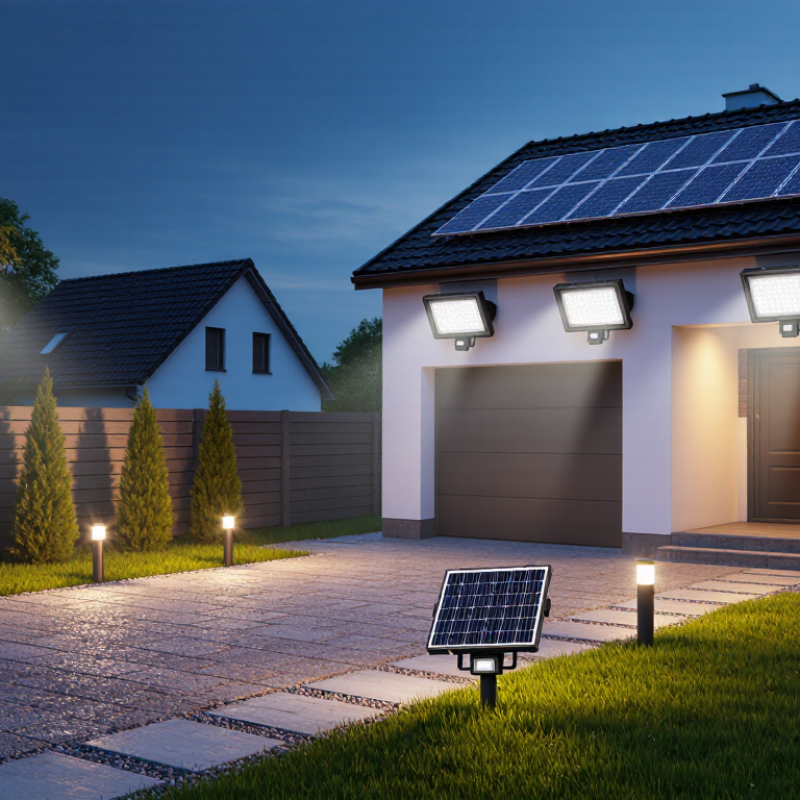
Top 10 Solar Flood Lights for Security How to Choose?

What Are Solar Flood Lights and How Do They Improve Security?

Solar flood lights are outdoor fixtures powered by sunlight. A solar panel charges a battery during daylight. At night, the stored energy powers bright LEDs, motion sensors, or both. Unlike wired lights, they can work beside gates, garages, paths, and sheds without trenching cables.

Their security value comes from visibility and surprise. A sudden beam can expose movement near a doorway or dark corner. Motion activation also saves battery power and avoids unnecessary glare throughout the night. In practical use, placement matters more than advertised brightness. A light facing a camera may create glare, while one aimed across a walkway can show a person’s movement clearly. Solar lighting supports security, but it cannot replace strong locks, cameras, or careful maintenance.

Tips: Choose a panel with direct sun for several hours daily. Check the sensor range with a slow walk after installation. Keep branches, dust, and snow away from the panel. Select weather resistance suitable for your local climate. A wide beam helps open yards, while a narrower beam suits entrances. Battery performance may drop during long cloudy periods. That limitation is easy to overlook. Test the light after several nights, not just immediately after installation. Some models claim impressive coverage, yet real results depend on mounting height, shadows, and seasonal sunlight.

Which Features Matter Most in a Solar Security Flood Light?

A solar security flood light needs more than a bright lumen number. The U.S. Department of Energy reports that LED lighting uses at least 75% less energy than incandescent lighting and can last 25 times longer. That efficiency matters, but beam spread matters too. A narrow beam may leave dark edges beside a driveway. Look for adjustable heads and a wide, even pattern.

Battery capacity is often overlooked. Check watt-hours, not only milliamp-hours. A 10 Wh battery provides limited runtime when motion events occur frequently. Choose a model with several nights of reserve, especially in cloudy climates. The International Energy Agency’s Photovoltaic Power Systems Programme reported global solar capacity above 1.4 terawatts in 2023, yet small outdoor systems still depend heavily on local sunlight and seasonal conditions. Solar is not magic.

A reliable sensor should offer adjustable range, sensitivity, and activation time. False triggers from trees can drain the battery quickly. An IP65 rating generally protects against dust and water jets, but not immersion, according to IEC 60529. Mount the panel away from shadows, then test the light after sunset. Three metres of height may improve coverage, although every property differs. I would not trust a claimed “all-night” runtime without checking weather data, battery size, and brightness settings. That small print matters.

How to Compare the Top 10 Solar Flood Lights

Comparing the top 10 solar flood lights for security requires more than checking brightness claims. I begin with lumens, beam angle, and motion-sensor range. A narrow beam can light a gate, while a wider beam suits a driveway. I also inspect the panel size and battery capacity. Small panels may struggle after several cloudy days.

For a fair comparison, I record lighting duration after a full charge. I test each light at dusk, then walk across its detection zone from different angles. Sensor delays matter. So does the transition from dim standby lighting to full brightness. Weather resistance should be clearly rated, preferably for heavy rain and dust. Strong mounting hardware is important, because a loose fixture can shift during wind.

Installation details often separate practical choices from impressive specifications. A five-metre cable allows better panel placement, especially beside shaded walls. Replaceable batteries may extend service life, but compatibility must be confirmed. My first comparison focused too heavily on maximum brightness. That was a mistake. Runtime, charging conditions, and glare affect real security performance more than a single headline number. I would keep notes for several nights, although seasonal weather can still make the results imperfect.

How to Choose the Right Solar Flood Light for Your Property

Choosing among the top 10 solar flood lights starts with your property, not the product page.

Measure the driveway, gate, wall, or garden corner first. A wide yard needs broad coverage, while a narrow entrance may need a tighter beam. Do not judge brightness by appearance alone. Check the lumen rating, beam angle, and motion-sensor range.

Look for a solar panel that receives several hours of direct sunlight each day. Shade from trees can reduce charging more than expected. Battery capacity also matters during cloudy weather. A useful light should operate through the night, not only during the first few hours.

Check the weather-resistance rating, mounting hardware, and cable length. IP65 protection is often suitable for exposed outdoor areas, but verify the manufacturer’s specifications.

Think about control and maintenance. Adjustable brightness, detection distance, and lighting duration can prevent wasted power. Warm light feels less harsh near living spaces, while cooler light may improve visibility around entrances. Test the sensor after installation. It may detect passing traffic or moving branches.

No light is perfect. I would also check the warranty, replacement parts, and installation instructions before buying. Some attractive models have weak brackets or confusing controls. That small detail can become a daily frustration. Choose reliable construction over extra features you may never use.

How to Install, Maintain, and Test a Solar Flood Light

Choosing a solar flood light begins with its site, not its advertised lumen rating. The Global Solar Atlas offers solar-resource maps at 250-metre resolution, helping installers compare local sunlight levels. Mount the panel where trees, walls, and roof edges cannot shade it during peak daylight. In the Northern Hemisphere, a south-facing position often performs well, but seasonal testing remains necessary. Use corrosion-resistant anchors, leave a drip loop, and seal cable entries carefully.

I install the light high enough to discourage tampering, yet low enough for safe maintenance. Aim the beam across paths, gates, and dark corners rather than directly into windows. Set the motion sensor after sunset, when false triggers become visible. The IEA PVPS Trends 2024 report records more than 2.2 terawatts of global solar PV capacity at the end of 2023. That growth supports solar lighting, but small batteries still limit overnight performance.

Clean the panel monthly with water and a soft cloth. Avoid abrasive tools. Check cable insulation, mounting screws, sensor lenses, and battery swelling every three months. Test operation by covering the panel before dusk, then recording activation time and brightness. Compare runtime across several cloudy nights. I once judged a unit after one sunny day; that was insufficient. Battery capacity, winter shade, and dust changed the result. Keep a simple maintenance log, although many homeowners forget this practical step.

FAQS

What is a solar flood light?

It uses daylight to charge a battery. After sunset, stored energy powers LEDs and sometimes motion sensors. No trenching is needed.

How can solar flood lights improve outdoor security?

A sudden beam can reveal movement near doors, gates, garages, or dark corners. It may discourage unwanted approach, but it cannot replace strong locks.

Where should a solar flood light be installed?

Place the panel in direct sunlight for several hours daily. Aim the light across a walkway, not directly toward a camera.

What features matter most?

Adjustable heads, broad beam coverage, sensor controls, and adequate battery capacity matter greatly. Brightness alone can be misleading.

How important is battery capacity?

Very important. A 10 Wh battery may provide limited runtime during frequent motion events. Several nights of reserve are helpful in cloudy climates.

How should the motion sensor be tested?

Walk slowly through the detection area after installation. Adjust range, sensitivity, and activation time until false triggers decrease.

Can solar flood lights work through long cloudy periods?

Their battery may weaken after several cloudy days. Real results can disappoint. Check performance after several nights, not immediately.

What weather protection should be considered?

Choose weather resistance suitable for your climate. An IP65 rating generally handles dust and water jets, but not immersion.

Do solar flood lights cover every area equally?

No. Mounting height, shadows, beam width, and seasonal sunlight affect coverage. A narrow beam may leave dark driveway edges.

What maintenance do solar flood lights need?

Remove dust, branches, and snow from the panel. Check sensor operation and battery performance regularly. I would not trust every runtime claim.

Conclusion

Solar flood lights combine energy-efficient LED illumination with a rechargeable battery powered by sunlight, providing practical lighting for driveways, entrances, gardens, and other vulnerable areas. They can improve security by illuminating movement after dark, discouraging unwanted activity, and helping residents or visitors see obstacles clearly without increasing regular electricity use. When considering how to choose solar flood lights for security, focus on brightness, motion-sensor range, detection angle, battery capacity, charging performance, weather resistance, lighting coverage, and adjustable settings.

To compare the top 10 solar flood lights, evaluate their performance under similar conditions rather than relying only on appearance or price. Consider the size and layout of your property, available sunlight, installation height, and whether you need continuous, sensor-activated, or adjustable lighting. Proper installation should position the panel toward strong sunlight and aim the light at key access points. Regularly clean the panel, inspect connections, and test the sensor and battery so the light remains dependable throughout changing seasons.

Aria

Aria

Aria is a dedicated marketing professional with a deep passion for innovative strategies and a keen understanding of our company's product offerings. With a wealth of experience in the industry, Aria excels at crafting engaging content that highlights the unique features and benefits of our......