Solar flood lights have become increasingly popular due to their energy efficiency and ease of installation. However, many users encounter issues with their performance over time. Understanding "why do solar flood lights stop working" is crucial for maintaining these systems effectively. Industry expert Dr. Sarah Anderson, a renewable energy specialist, states, "Common issues can often be prevented with proper understanding and maintenance of solar technology."
Research indicates that up to 30% of solar lights fail prematurely due to various reasons, such as battery degradation and environmental factors. Poor sunlight exposure can significantly affect performance. Regular maintenance and awareness of product specifications are often overlooked by users.
Misunderstanding product capabilities can lead to frustration. In some cases, improper installation or neglecting to clean the solar panels can contribute to failures. Addressing these common pitfalls early can extend the lifespan of solar flood lights. Exploring these points will help users make informed decisions and optimize their solar lighting systems effectively.
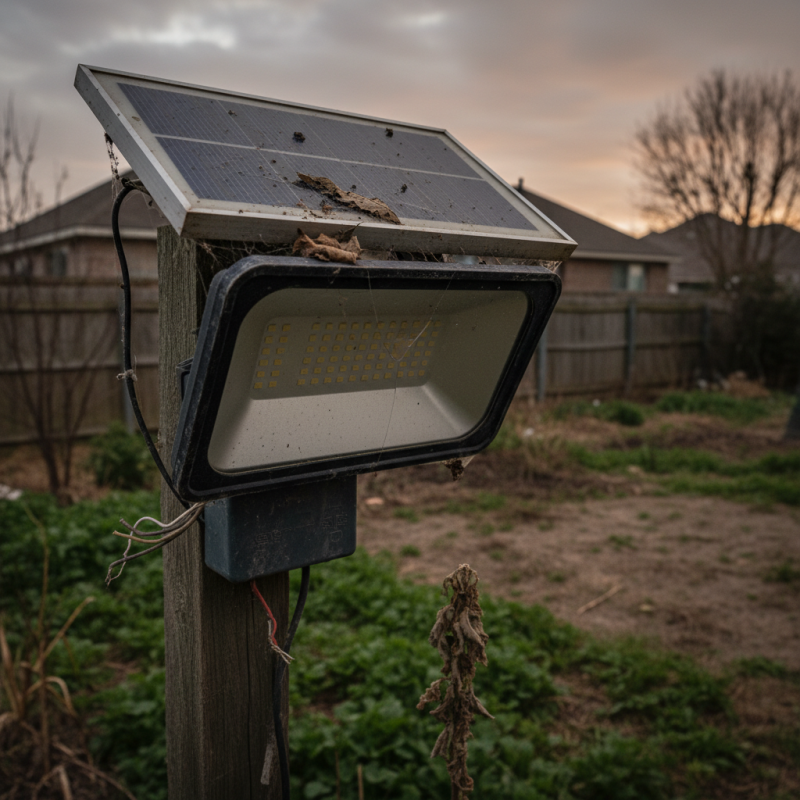
Solar flood lights are an energy-efficient choice for outdoor lighting. However, many users encounter issues, especially with batteries. Common battery problems often lead to unexpected malfunctions.
One prevalent issue is battery depletion. If the solar panel does not receive enough sunlight, the battery won’t charge fully. This can happen in winter months or due to poor installation. Additionally, batteries may age. Over time, they lose capacity and effectiveness. In humid or very hot environments, batteries may degrade even faster, leading to operational failures.
Another factor is improper battery maintenance. Some users forget to clean dirt or debris off the solar panel, which reduces sunlight absorption. Regular checks on the battery connections can prevent loose connections from interrupting power flow. Not replacing batteries when needed can leave users in darkness, causing frustration and inconvenience. Addressing these common battery issues can lead to a more reliable solar lighting experience.
: Battery depletion often occurs when solar panels lack sufficient sunlight for charging. This is common in winter or due to poor installation.
Over time, batteries lose capacity and effectiveness. Hot or humid environments can accelerate this degradation, leading to failures.
Proper maintenance is crucial. Dirt on the solar panel can reduce sunlight absorption, while loose connections can interrupt power flow.
Insufficient sunlight reduces battery charging. This may cause dim lighting or complete failure at night, affecting usability.
Solar lights installed in shaded areas may not absorb enough sunlight. Trees and buildings can block sunlight exposure during the day.
Regular inspections are essential. Clean the lights and consider replacing defective LED units if issues persist, like flickering.
Regularly clean solar panels and check their tilt. Dirt and poor angles can significantly reduce efficiency and performance.
Cheap alternatives may save money initially but can lead to frequent issues and failures over time, ultimately costing more.
Users should replace batteries as needed. Neglecting this can result in unexpected darkness and inconvenience during nighttime.
Some neglect cleaning the solar panel, which reduces its effectiveness. This simple task can ensure reliable performance.
Solar flood lights are a convenient and eco-friendly lighting solution, but many users encounter the frustrating question: why do solar flood lights stop working? Common battery issues often lead to performance problems, as degraded or improperly charged batteries fail to supply adequate power. Additionally, insufficient sunlight exposure can significantly hinder their functionality, limiting energy absorption needed for optimal operation.
Defective LED components also contribute to the failure of these lights, as a single malfunctioning LED can compromise the entire unit. Furthermore, improper installation can result in inadequate positioning for sunlight collection, leading to inefficiency. Lastly, environmental factors such as extreme weather or physical damage can adversely affect the durability of solar flood lights. Understanding these potential pitfalls can help users maintain their solar lighting systems effectively.

 Joliras Light