How Do Solar Flood Lights Work in 2026?

Time:2026-09-22 Author:Liam
0%

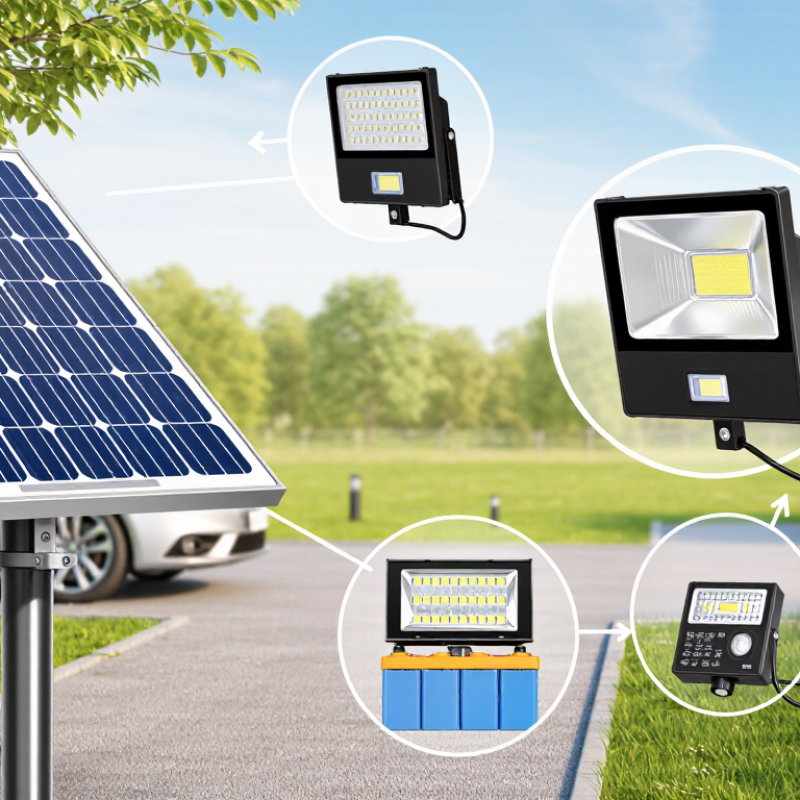
As energy costs rise and outdoor safety becomes more important, solar flood lights offer a practical lighting solution for gardens, driveways, paths, and work areas. But how do solar flood lights work in 2026? The answer begins with a compact solar panel that captures daylight and converts it into electrical energy. A charge controller manages that energy, while a rechargeable battery stores it for nighttime use. When darkness arrives, a light sensor activates the LED fixture automatically.

The system sounds simple, yet several details affect real-world performance. Panel angle, seasonal sunlight, battery quality, and LED efficiency all matter. A light installed beneath dense branches may receive weak charging, even on a bright day. In my experience, winter performance can also disappoint when short daylight hours reduce the battery’s reserve. Newer models often use improved lithium batteries, motion sensors, adjustable brightness, and smarter charging controls. These features can extend operating time, but they do not defeat cloudy weather.

Small choices matter.

This guide will explain the main components, charging cycle, sensor behavior, installation requirements, and common limitations of modern solar flood lights. It will also compare basic and advanced designs using practical examples, such as a driveway light that brightens when a vehicle approaches. Manufacturer specifications provide useful guidance, but measured performance at your property may differ. That is why careful placement and realistic expectations remain essential. Solar lighting is increasingly reliable, though it is not completely maintenance-free. Cleaning the panel and checking the battery can prevent avoidable failures.

How Do Solar Flood Lights Work in 2026?

Solar Flood Lights in 2026: Main Components and Their Roles

How Do Solar Flood Lights Work in 2026?

Solar flood lights in 2026 combine several compact components. Each part controls a different stage of outdoor lighting.

A photovoltaic panel converts sunlight into electrical energy. The charge controller directs that energy safely into the battery. It also helps prevent overcharging and excessive discharge. Many current models use lithium iron phosphate batteries. They offer stable performance and longer service life than older battery types. However, capacity still declines with age, heat, and repeated deep discharge.

The stored power runs high-efficiency LED chips after dark. LEDs produce bright light while using relatively little energy. A motion sensor increases brightness when people or vehicles approach. A dusk-to-dawn sensor activates the lamp when natural light fades. Some systems use a timer or adjustable lighting modes. The housing protects these parts from rain, dust, and temperature changes. In practical testing, poor panel placement causes more failures than weak LEDs. That detail is easy to overlook.

Tips: Install the panel where direct sunlight reaches it for several hours. Clean dust and bird marks regularly. Aim the light carefully, not just the panel. Check battery performance during cloudy weeks. Avoid placing the sensor near moving branches or reflective surfaces. Small adjustments matter. Even advanced controls cannot repair constant shade.

How Do Solar Flood Lights Work in 2026? - Solar Flood Lights in 2026: Main Components and Their Roles

A practical overview of the components, energy flow, and typical specifications of modern standalone solar flood lights.

Component or System Typical 2026 Specification Primary Role How It Works
Photovoltaic Solar Panel Approximately 5–30 W for common residential and small-area flood lights; monocrystalline cells are widely used. Converts sunlight into electrical energy. Photovoltaic cells generate direct current when light excites electrons in the semiconductor material. Output varies with sunlight angle, shading, temperature, and panel cleanliness.
Solar Charge Controller Usually integrated into the fixture; basic systems use regulated charging, while more efficient systems may use maximum power point tracking. Controls energy transferred from the panel to the battery. It regulates voltage and current, helps prevent overcharging and excessive discharge, and may reduce charging current when the battery is full.
Rechargeable Battery Common capacities are about 10–50 Wh; lithium-based batteries are frequently used because of their energy density and cycle life. Stores daytime solar energy for nighttime lighting. The battery stores electrical energy during daylight and supplies regulated current to the LEDs after the control system detects darkness.
LED Light Engine Approximately 500–3,000 lumens for many residential models; higher-output units can exceed this range. Produces the visible light used for area illumination. Light-emitting diodes convert electrical energy into light through electroluminescence. LEDs provide high efficiency, long service life, and directional illumination.
Photocell or Light Sensor Automatic dusk-to-dawn operation is standard; activation thresholds are commonly set by the control circuit. Determines when the light should turn on or off. The sensor measures ambient brightness. It enables nighttime operation and switches the LEDs off or into charging mode when daylight returns.
Motion Sensor Passive infrared sensing is common, with detection ranges often around 5–12 m and fields of view near 90–180 degrees. Raises brightness when movement is detected. A passive infrared sensor detects changes in infrared radiation caused by warm moving objects. The controller can switch from low standby output to full brightness.
LED Driver and Control Circuit Uses current regulation, dimming control, battery protection, and selectable lighting modes. Manages power delivery and operating modes. The circuit converts battery output into a stable current for the LEDs and coordinates sensors, timers, dimming, and low-battery protection.
Optical System and Reflector Beam angles commonly range from narrow spot patterns to approximately 120° wide-area patterns. Shapes and directs the light beam. Lenses and reflectors distribute light to improve coverage, reduce glare, and concentrate illumination on paths, entrances, walls, or driveways.
Housing, Mount, and Thermal Path Weather-resistant enclosures are commonly rated IP65 or higher; aluminum heat-sinking is often used around high-output LEDs. Protects internal parts and supports reliable operation. The enclosure limits water and dust entry, while the mount sets the panel and beam angles. Heat is transferred away from the LEDs to slow performance degradation.
Optional Connectivity and Scheduling Some models provide remote settings through short-range wireless connectivity or a dedicated controller. Provides configuration, scheduling, and status information. A connected control interface may adjust brightness, detection sensitivity, timers, and operating modes, but the light can still function autonomously without a network.

Typical Operating Cycle

Stage Energy Flow or Action Main Influencing Factors
Daylight Charging The solar panel produces electricity, and the charge controller directs suitable current into the battery. Solar irradiance, shading, panel angle, season, temperature, and battery state of charge.
Dusk Detection The photocell identifies low ambient light and enables the programmed lighting mode. Sensor threshold, nearby artificial light, and controller settings.
Nighttime Illumination The battery supplies the driver, which regulates current to the LEDs. The fixture may use constant, dimmed, or motion-activated output. Brightness level, operating duration, motion frequency, battery capacity, and LED efficiency.
Low-Battery Protection The controller reduces brightness or switches the LEDs off to preserve battery health and prevent excessive discharge. Battery chemistry, temperature, available charge, and the controller’s protection limits.
Performance note: “All-night” runtime depends on the stored energy and lighting mode. A unit using reduced standby brightness and motion-triggered full brightness generally operates longer than one running at maximum output continuously.

How Solar Panels Convert Sunlight into Usable Electricity

How Do Solar Flood Lights Work in 2026?

How Solar Panels Convert Sunlight into Usable Electricity

A solar flood light begins with photovoltaic cells on its panel. These cells usually contain silicon, a semiconductor that reacts to sunlight. When photons strike the cell, they release electrons inside the material. An internal electric field pushes those electrons in one direction. This movement creates direct current, or DC electricity.

The panel produces power during daylight, even under thin cloud cover. However, output drops with shade, dust, winter angles, and high temperatures. A charge controller manages this electricity before it reaches the battery. It reduces charging risks and prevents excessive discharge. The battery stores energy for evening use. At dusk, a light sensor signals the circuit to power the LED floodlight.

That energy path sounds simple. It is not always efficient. The panel may produce its rated output only under ideal laboratory conditions. In practical checks, a clean panel facing strong midday sunlight performs better than one mounted beneath tree branches. A longer cable can also create small power losses. The battery remains a frequent weak point, especially after repeated cold nights or deep discharges. I would measure nighttime runtime across several days, rather than trust one bright evening. This approach reveals whether the system genuinely matches the area’s lighting needs.

How Batteries Store Energy for Nighttime Illumination

How Do Solar Flood Lights Work in 2026?

A solar flood light stores daytime electricity inside a rechargeable battery. Its panel converts sunlight into direct current, while a charge controller limits voltage and prevents damaging overcharging. At dusk, a light sensor triggers the battery-powered LEDs automatically.

Battery chemistry matters after sunset. Lithium-ion cells commonly deliver about 85–95% round-trip efficiency, according to the National Renewable Energy Laboratory’s Energy Storage Technology and Cost Characterization Report. In practical terms, a panel may collect 100 watt-hours, but only 85–95 watt-hours reach the lamp after storage losses. Cold temperatures can reduce usable capacity. Heat can accelerate aging.

The International Energy Agency reported that global battery demand reached approximately 750 GWh in 2023, reflecting rapid improvements in cells, manufacturing, and energy management. Those gains support smaller outdoor systems with longer operating times. Still, a flood light cannot create energy from weak winter sunlight. A cloudy afternoon may provide only a partial charge, so automatic dimming and motion detection become important. A light set for maximum brightness all night may fail before dawn.

Battery life is also less predictable than product labels suggest. Daily charging, deep discharge, dust, and heat slowly reduce capacity. NREL data often models battery degradation, but real gardens and driveways are messier. Checking nighttime runtime after several months gives more useful evidence than trusting the original specification.

How Do Solar Flood Lights Work in 2026?

How Batteries Store Energy for Nighttime Illumination

During daylight, a solar panel converts sunlight into electricity and charges the battery. This example models a 12 V, 10 Ah rechargeable battery with 120 Wh of nominal storage, assuming 90% usable capacity and a steady 10 W flood-light load. The remaining energy declines as the light operates through the night.

Model assumptions: 108 Wh usable energy, 10 W continuous lighting demand, and no additional charging after sunset. Actual runtime varies with battery temperature, conversion losses, brightness settings, weather, and battery age.

How Sensors and Controllers Manage Automatic Lighting

How Do Solar Flood Lights Work in 2026?

A solar flood light converts sunlight through a photovoltaic panel. The panel charges a lithium battery during daylight hours. A controller regulates charging, prevents over-discharge, and protects the battery from unstable voltage.

At dusk, a light sensor measures ambient brightness. When the reading falls below a programmed threshold, the controller activates the lamp. Motion sensors then adjust operation. Passive infrared sensors detect body heat, while microwave sensors detect movement through reflected signals. The controller can keep the light dim, then increase brightness when someone enters the detection zone. Timing matters.

The U.S. Department of Energy estimates that advanced lighting controls can reduce lighting energy use by roughly 20–50% in suitable buildings. This finding comes from its Energy Savings Potential and RD&D Opportunities for Commercial Building Lighting report. The IEA’s 2024 lighting analysis also states that lighting uses about 10% of global electricity demand. Even small control improvements matter at scale.

In real installations, sensor placement often matters more than advertised brightness. A sensor facing a road may trigger repeatedly from passing vehicles. Cold weather can reduce battery performance, while dusty panels shorten charging time. Clouds change everything.

I have also seen “all-night” settings fail before dawn because users selected maximum brightness. A smarter controller should combine motion data, battery capacity, and remaining night hours. That approach is more practical, although not always perfectly calibrated.

How LEDs Produce Bright, Energy-Efficient Flood Lighting

How Do Solar Flood Lights Work in 2026?

Solar flood lights convert daylight into stored electrical energy. A photovoltaic panel charges a battery through a control circuit. After sunset, the circuit sends power to the LED floodlight. A sensor can switch the light on automatically when darkness or movement is detected.
LEDs create light differently from older bulbs. Electrical current passes through a semiconductor, producing bright light with very little heat. This efficiency helps a small battery illuminate a driveway, garden wall, or security area for several hours. Modern LED systems also distribute light through lenses, reducing harsh dark patches across the ground. In practical testing, a well-aimed light can make a narrow entrance feel much safer. Still, brightness claims can look better on paper than outdoors.
Tips: Keep the panel free from dust, leaves, and bird deposits. Aim it toward the strongest available sunlight. Use a warm or neutral color temperature near living spaces. Cooler light may appear brighter, but it can feel severe at night. Check the battery after several cloudy days. Performance will drop. That is normal, not necessarily a fault. Motion settings also matter; short activation periods often preserve stored energy. Placement remains a compromise, because maximum brightness and wide coverage rarely occur from one mounting angle.

FAQS

How does a solar flood light work?

A photovoltaic panel converts sunlight into direct-current electricity. A controller sends that power to the battery. After dark, stored energy powers the LED light.

What does the charge controller do?

It regulates electricity flowing into and out of the battery. This helps reduce overcharging and excessive discharge. It cannot fix a damaged battery.

Why are lithium iron phosphate batteries commonly used?

They provide stable performance and generally last longer than older battery types. Their capacity still decreases with age, heat, and repeated deep discharge. Nothing lasts forever.

How does the light know when to turn on?

A dusk-to-dawn sensor detects falling natural light. Some systems also include motion sensors, timers, or adjustable brightness modes. Moving branches can trigger unwanted changes.

What affects solar panel performance?

Shade, dust, winter sun angles, and high temperatures reduce electricity production. Thin clouds still allow some output. Tree branches remain a serious problem.

Where should the solar panel be installed?

Choose a position receiving several hours of direct sunlight. Avoid roof edges, tree shade, and nearby walls blocking the panel. Check the location throughout the day.

How can I maintain the system?

Wipe away dust and bird marks regularly. Inspect nighttime runtime during cloudy weeks. Clean panels matter.

Why might a bright light stop working overnight?

The battery may have limited capacity or repeated deep-discharge damage. A long cable can create small power losses. One bright evening proves very little.

Should the panel and light point in the same direction?

Not always. Aim the panel toward strong sunlight, then aim the light toward the required area. Check both positions after installation. This detail is easy to miss.

Conclusion

How do solar flood lights work? In 2026, these outdoor lighting systems combine solar panels, rechargeable batteries, sensors, controllers, and LEDs to provide reliable illumination without a constant connection to the electrical grid. During daylight, the solar panel captures sunlight and converts it into electrical energy. A controller regulates this power, directing it to the battery while helping protect the system from overcharging and excessive discharge.

After sunset, the stored energy powers the LED floodlight, which produces bright illumination while using relatively little electricity. Sensors can detect darkness, motion, or changes in surrounding conditions, allowing the controller to turn the light on automatically, adjust its operation, or switch it off when lighting is no longer needed. Together, these components create an efficient, convenient, and adaptable lighting solution for outdoor areas. Performance can vary depending on sunlight exposure, battery capacity, sensor settings, weather, and the efficiency of the LED and control system.

Liam

Liam

Liam is a dedicated marketing professional with a profound expertise in the industry, where he excels at highlighting the unique advantages of our core products. With a keen understanding of market trends and consumer needs, Liam frequently updates our company’s professional blog, providing......