2026 Top Solar Flood Lights Are They Waterproof?

Time:2026-11-15 Author:Charlotte
0%

Solar flood lights can brighten a driveway, garden path, or garage wall without wiring to household power. But outdoor use brings rain, dust, heat, and occasional knocks from windblown branches. So, are solar flood lights waterproof? The honest answer depends on the model, its IP rating, and how well its seals hold up over time. “Waterproof” is not a single universal guarantee.

In this guide to 2026’s top solar flood lights, we’ll explain how to read common IP ratings and what they can—and cannot—tell you. For example, an IP65 rating indicates protection against dust and water jets, but it does not mean a light can be submerged. Check the product label and manufacturer’s instructions. Look closely at the housing, cable entry points, solar panel connections, and battery compartment. These small details matter after weeks of rain. Installation matters, too: a light mounted beneath a deep roof overhang faces different exposure from one on an open fence post. A rating helps, but it is not a promise that every unit will age equally well. Even dependable products can develop worn seals. We’ll compare practical features alongside weather protection, so you can choose a light suited to your location rather than relying on a bold label alone. That distinction is easy to miss.
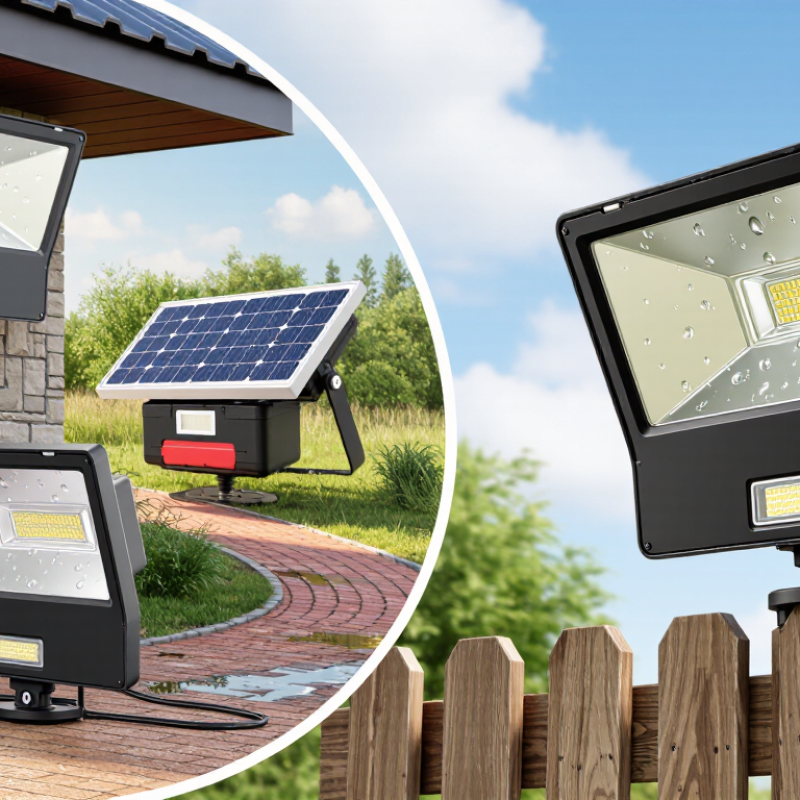
2026 Top Solar Flood Lights Are They Waterproof?

What Solar Flood Lights Are and How They Work

A solar flood light uses a small photovoltaic panel to convert daylight into electricity. The electricity charges a rechargeable battery, usually housed inside the lamp or a separate enclosure. After dark, a control circuit powers the LED array. No outlet is needed. That matters for sheds, driveways, and garden walls where wiring is inconvenient.

Many models include a dusk sensor, so the light switches on when daylight fades. Some also use motion detection: a person crossing the beam can trigger a brighter setting. The panel needs several hours of direct sun for reliable charging. Shade from a roof edge or tree can reduce runtime, even when the battery is new. It is easy to overlook panel placement while focusing on the lamp.

Water resistance depends on the fixture’s stated protection rating, not on the word “solar.” Check the rating on the product label or manual, and confirm whether it applies to the lamp, panel, and cable connections. A weather-resistant light may handle rain but still be vulnerable to standing water or poorly sealed connectors. Mounting it under a slight overhang can help, though that may also shade the panel. The trade-off is real. Regularly check seals and clean dust from the panel; small details affect both charging and service life.

How Waterproof Ratings Apply to Solar Flood Lights

A waterproof rating describes how well a solar flood light resists dust and water under specific test conditions. The first IP digit refers to solid particles; the second refers to water. For example, IP65 means dust-tight protection and resistance to water jets. It does not mean the light can be submerged. IP44 protects against splashing, but may offer less reassurance in a spot exposed to driving rain. Check the manufacturer’s test details, not just the word “waterproof.”

The rating applies to the tested product, but installation still matters. Water can collect around a poorly angled housing or enter through a loose cable connection. Keep the panel and light clear of puddles, and avoid placing the battery compartment where runoff gathers. A high rating is useful, not a guarantee against every weather condition. It is easy to focus on the number and overlook the cable seal; I would check that twice.

Tips: Match the rating to the location. For an exposed wall, look for a rating suited to rain and water jets. Tighten cable glands, inspect seals after installation, and follow the care instructions. After a storm, check for condensation behind the lens. A little moisture may call for closer inspection, even when the rating looks reassuring.

2026: Are Solar Flood Lights Waterproof? How IP Ratings Apply

Water-jet tests use different flow rates at IPX5 and IPX6. These figures describe the test conditions—not a product’s everyday water-flow limit.

How to read the rating: IPX4 covers splashing; IPX5 and IPX6 cover water jets; IPX7 covers temporary immersion up to 1 metre for 30 minutes; IPX8 covers immersion under conditions agreed for the product. The “X” means the rating does not specify a dust-protection level. Check the rating for the complete light, including its seals and cable connections.

Which Components Need Protection from Water

A solar flood light has several water-sensitive parts, not just the bright front lens. The solar panel’s cable entry and rear junction box need sealed connections. Water can track along a cable and reach the electronics, especially when it hangs downward without a drip loop. Small parts matter. Inspect the rubber grommets, screw covers, and cable glands for cracks or loose fittings. A seal may look intact while sitting unevenly against the housing.

The battery compartment and control board need particular protection. Moisture inside can corrode contacts, weaken charging, or cause intermittent operation. The lamp housing also needs sealed joints around its lens, switches, and mounting points.

Water finds gaps. Check the product’s stated IP rating, but read what the rating applies to; a rating for the lamp may not cover every connector or the separate panel. Avoid assuming “waterproof” means suitable for submersion or pressure washing.

After heavy rain, look for fogging behind the lens, damp battery contacts, or greenish corrosion near terminals. Drying the outside is easy; finding a slow leak is less obvious. Even careful inspection can miss one, so follow the manufacturer’s installation and maintenance guidance.

How to Check and Maintain Weather Resistance

A solar flood light’s weather resistance depends on more than its outer casing. Check the IP rating on the product label or manual, and confirm what protection it describes. A higher rating generally indicates stronger protection against dust or water, but it does not make every light suitable for submersion. Never assume. Look for intact gaskets around the lens, battery compartment, and cable entries. Small gaps matter.

Inspect the light before installation and after severe storms. Watch for cracked plastic, loose screws, cloudy lenses, or moisture behind the cover. A few droplets on the outside are normal; water inside the housing is a warning. Mount the unit where water can drain away, rather than collecting around its base. Keep the solar panel tilted enough to shed rain and debris, while following the manufacturer’s installation guidance. A quick spray from a hose can reveal obvious leaks, but it cannot reliably prove long-term waterproofing. That test is easy to overtrust.

For routine care, switch the light off before cleaning, then wipe the panel and housing with a soft, damp cloth. Avoid pressure washers, harsh cleaners, and opening sealed compartments unless the instructions allow it. After wet weather, check for condensation and corrosion near connectors. If moisture keeps returning, stop using the unit and contact the seller or a qualified repair professional. Weather seals wear out; checking them once a season is sensible, though easy to forget.

How to Choose a Reliable Solar Flood Light in 2026

2026 Top Solar Flood Lights: Are They Waterproof?
How to Choose a Reliable Solar Flood Light in 2026

Choosing a reliable solar flood light starts with matching its output to the space. A driveway needs even coverage, not just a large lumen number on the box. Check whether the maker lists runtime at full brightness and battery capacity. A small panel shaded by a roof may not recharge the battery fully, even on a long summer day. That detail is easy to miss.

“Waterproof” is not a single performance level. Under IEC 60529, an IP65 enclosure is dust-tight and resists water jets, but it is not designed for immersion. Check the rating for the complete fixture, including its sensor and cable connections. Also inspect the seal and mounting angle; standing water can expose weak points over time. Solar panels age, too. A 2013 review by Jordan and Kurtz in Progress in Photovoltaics examined nearly 2,000 photovoltaic degradation rates and reported a median rate of about 0.5% per year. That figure is not a lifespan promise for compact light panels, but it is a useful reminder that output can decline.

Tips: Compare measured runtime, not just advertised brightness. Look for replaceable batteries, a clear warranty, and a documented IP rating. If the light faces winter shade, choose a larger panel or a lower-power mode. A little uncertainty remains: real performance depends on installation, weather, and maintenance.

2026 Top Solar Flood Lights: Are They Waterproof? How to Choose a Reliable Solar Flood Light in 2026

What to Check Reliable Specification or Evidence Why It Matters
Waterproof rating Look for a clearly stated IP rating for the light and, where applicable, its solar panel, battery compartment, and connectors. Under IEC 60529, IP65 is dust-tight and protected against water jets; IP66 is dust-tight and tested against more powerful water jets. The rating describes tested enclosure protection, not unlimited resistance to every weather condition or installation error.
Exposure to temporary immersion IP67-rated equipment is tested for temporary immersion in water up to 1 metre deep for up to 30 minutes under specified test conditions. IP67 is not a promise that a light can be left underwater. Install it according to its instructions and keep it out of standing water unless the product is specifically designed for that use.
Meaning of lower IP ratings IP44 indicates protection against solid objects 1 mm and larger and splashing water from any direction. It does not mean dust-tight or protected against water jets. For an exposed outdoor location, check whether the stated rating matches the actual rain, dust, and spray conditions.
Rating documentation Check the product datasheet or manual for the exact IP rating, which components it covers, and any installation limits. Prefer documentation that identifies the relevant test standard. A rating shown only in a headline may not clarify whether it applies to the complete assembly or only to one component.
Solar panel placement Choose a location with direct sunlight for as much of the day as practical. Check panel orientation, tilt, shading, and whether the panel can be positioned separately from the lamp. Shade, poor orientation, and short winter days can reduce charging and nighttime operating time.
Panel and battery information Compare the panel’s rated power in watts (W) and the battery’s capacity in watt-hours (Wh), when provided. If capacity is listed only in amp-hours (Ah), the battery voltage is also needed to compare energy capacity. These figures help assess charging potential and stored energy; neither alone guarantees a particular runtime.
Runtime claims Look for test conditions such as brightness setting, motion-sensor activity, charging conditions, and operating mode. Treat runtime as dependent on those conditions. Cloud cover, season, battery age, temperature, and frequent activation can change how long the light operates.
Light output and coverage Compare stated lumens, beam angle, mounting height, and lighting pattern together. Check whether output is specified for continuous operation or a temporary boost mode. Lumens describe total light output, but do not by themselves show how evenly a particular area will be illuminated.
Motion sensor and controls Check whether the light offers adjustable detection range, sensitivity, illumination time, and brightness modes. Confirm how it behaves when the battery is low. Appropriate settings can balance useful illumination with available stored energy.
Materials and installation Review the stated housing material, mounting hardware, cable routing, and instructions for sealing any user-accessible covers or connectors. Weather resistance can be reduced by damaged seals, loose covers, incorrect cable entry, or unsuitable mounting.
Battery replacement and support Check the battery type, whether it is replaceable, and the availability of clear care instructions, spare parts, and warranty terms. The battery is a wear component; practical replacement options can affect the product’s useful service life.
Final selection check Match the documented IP rating and lighting coverage to the installation site, then compare panel power, battery energy, and runtime test conditions. A reliable choice depends on the site and expected use, not on a single rating or headline specification.

Note: IP ratings are based on standardized tests and do not guarantee performance if a product is damaged, incorrectly installed, or used outside its specified conditions.

FAQS

What does an IP65 rating mean for a solar flood light?

It means the enclosure is dust-tight and resists water jets. It does not mean the light can be submerged. Never assume.

Which parts should I inspect for weather damage?

Check gaskets around the lens, battery compartment, and cable entries. Look for cracks, loose screws, cloudy lenses, or moisture inside.

Can a hose test prove that a light is waterproof?

No. A brief spray may reveal an obvious leak, but it cannot prove long-term protection. That test is easy to overtrust.

Where should I mount the light?

Choose a spot where water drains away from the base. Tilt the panel enough to shed rain and debris, following the installation instructions.

How often should I check the seals?

Check them before installation and about once each season. Inspect again after severe storms. It is sensible, though easy to forget.

How should I clean the panel and housing?

Switch the light off, then wipe both with a soft, damp cloth. Avoid pressure washers and harsh cleaners. Keep it simple.

What should I do if moisture appears inside the housing?

Stop using the light if moisture keeps returning. Contact the seller or a qualified repair professional. A few outside droplets are different.

How can I tell whether a solar flood light will run long enough?

Compare stated runtime at full brightness and battery capacity, not just the lumen figure. A shaded panel may recharge poorly, even on a long summer day.

Do solar panels lose output over time?

Output can decline with age. One review reported a median photovoltaic degradation rate of about 0.5% yearly, but that is not a lifespan promise for small light panels. Real results vary.

Conclusion

Solar flood lights use photovoltaic panels to charge a battery during the day, then power bright LEDs after dark, often with a sensor or timer to control operation. If you’re asking, “are solar flood lights waterproof,” the answer depends on the product’s stated weather-resistance rating and construction. A rating can indicate how well the light resists dust and water, but it does not mean every part can withstand prolonged immersion or every weather condition.

The panel, light housing, battery compartment, cable connections, and seals all need suitable protection, since water entering any of these areas can affect performance or shorten the light’s service life. Check the rating and installation instructions before purchase, and inspect seals, wiring, and mounting points periodically for wear, dirt, or damage. In 2026, compare the rated protection with your local conditions, along with battery capacity, charging performance, materials, and warranty terms, to choose a reliable solar flood light.

Charlotte

Charlotte

Charlotte is a seasoned marketing professional with a deep understanding of the company's portfolio and a passion for elevating its presence in the market. With a keen eye for detail and a commitment to excellence, she ensures that our professional blog is regularly updated with insightful articles......